Sunday, May 20, 2012

My Connections to Play

“You can discover more about a person in an hour of play than in a year of conversation.” -Plato.

Growing up, I was an Air Force brat.  With this came many different moves and many different times when I had to make new friends.  I remember when I was younger, I would go door to door when we moved somewhere new, ringing doorbells looking for someone my age to play with.  As I remember back to the places I lived, I remember a lot of outdoor play, and each place I lived seemed to have a theme.  Here are a few of the places I lived and the types of things I did when I lived there for play:
Summer of 1995
I was 9 years old and was in my bathing suit most of the summer
(I'm in the middle)
Fairfax, VA (2nd-4th grade) – When it was warm outside, the neighborhood game was kickball!  There were many kids my age and I remember gathering on hot summer days to play kickball.  One winter, there was a snowstorm that blew through and canceled school for a week.  I remember the pile of snow at the end of the cul-de-sac from the plows…it was probably 8-10 feet high and we had a lot of fun climbing it and sliding down.  I also remember sledding down a hill that year.  At the bottom of the hill was a chain link fence, so we padded the fence with lots of blankets and drove our sleds right into it, going as fast as we could. 

Winter of 1996
Sitting on top of the hill with my friends getting ready to slid down for the 53rd time
(I'm in blue with the red ski mask)
Montgomery, AL (5th grade) – I only lived here a short time, but riding bikes was the neighborhood activity.  Our street was a big hill (the cul-de-sac was at the bottom of the hill) and I remember building ramps out of plywood and cinder blocks and flying down the hill to see how far we could jump on the ramps. 

Charleston SC (6th-8th grade) – I was getting a little older at this point, but still loved playing outside.  We used to swim at the neighbor’s house and go look for shark teeth at the end of the neighborhood that hadn’t been built yet.  There was a lot of undeveloped land near the Ashley River and for some reason, there was an abundance of shark teeth in the dirt there.  I stored mine in a blue M&Ms Minis tube. 
Halloween 1994
Halloween was one of my favorite holidays because I got to dress up - one of my favorite passtimes
(I'm in the middle, on the left, in an angel costume)
Sidenote - my brother is the tall one in the back...don't know what he was dressed as...
Some of my favorite indoor activities when I was younger (no matter where I lived) were playing Barbies and dress-up.  I loved my pretend world where I could make up situations and pretend to be someone else. 
I had lots of "modern" barbies, but I also had this one.  My mother passed many of her barbies on to me.  This was one of my favorites because of her sparkley dress
“In our play we reveal what kind of people we are.” –Ovid

I think play has changed a lot since I was a kid.  There is so much more technology now than there was when I was younger, and I feel that so much of play today is based around that.  There seems to be less creative play in pretending and more video games and television.  When I was a child, we only had one TV in the house and we watched it together.  If you didn’t like what the family was watching, you could go play with something else. 

To me, play is essential.  Through play we learn to create, to take turns, and to problem solve.  Play is more than just fun, it is necessary. 

“Play is our brain's favorite way of learning.” -Diane Ackerman

Saturday, May 12, 2012

My Relationships

Relationships are my backbone.  As humans, we are not created to be alone.  God created Adam and then decided that man should not be alone, so he created a partner: Eve.  Relationships give us support and stability.  They also give us a system of checks and balances, guiding us through life decisions and tough times.
My God

I am a Christian.  I believe that God sent his son to die for me so that I could have eternal life and live with him in heaven.  My relationship with my God gives me strength and guidance to make wise decisions and is always with me, even when no one else is there.  He gives me love, joy, peace, patience, kindness, goodness, faithfulness, gentleness, and self-control.  Without him, I’d be a hot mess of emotions and impulsiveness. 

My Husband – James

We have been married for almost 4 years now, and known each other for 7 ½.  He is my brains!  He provides logic and reasoning to this woman’s emotional way of thinking.  He supports me through all my decisions and keeps me in check.  He loves me unconditionally.  He has an incredible work ethic and is very smart.  He knows everything about everything, and can do everything from re-do a kitchen (which I helped with!) to write an emergency plan for an entire county.  His colleagues view him as an invaluable member of their team and he constantly receives praise for his high quality work. 

My Parents - Mom and Dad

My parents instilled a lot of things in me.  They taught me to be a woman of integrity and to love unconditionally.  They were my support system before anyone else.  From my Father, I gained leadership skills.  He has always been a strong leader and set a Godly example for my brother and me.  He has shown me that being a leader means you are fair, consistent, and merciful when appropriate.  From my Mother I gained a nurturing heart; this one of my greatest assets at work (and will be one day when I have children of my own!).  I love the children I work with every day.  One cannot work with babies and not have a nurturing spirit. 

My Brother and his family - Rick, Ashley and Micah

We were never best friends because 1) he is a guy and 2) because we are five years apart.  On the other hand, we have a very good relationship.  He (like my Father) showed me what a man of integrity was.  He (somehow) married someone WAY out of his league and gave me hope of finding a wonderful Christian spouse too!  (Ironically enough, I ended up marrying someone exactly my brother’s age!)  He now has an amazing little boy who I can’t help but talk about (and I have just about every other blog entry).  For those of you who are new to my blog, Micah is 2 ½, adopted, and precious!  He (unfortunately) is just as dorky as his Dad J BUT is just as cute as his Mom.  It has been fun to watch the family evolve from a distance and watch my brother become a husband and father. 

My Co-Teacher - Cindy


My mentor.  Cindy Larsen has been one of the greatest things that has happened to me in the past two years.  Together, we teach 8 babies every day.  She has guided me through lesson plans, provocations, and learning stories.  She is twice my age, so you wouldn’t think we have much in common, but we really do.  We work seamlessly together because of our like-mindedness.  I am SO blessed to have the best co-teacher on the face of the planet.  She makes me a better teacher.

My Babies


My babies are my FAVORITE part of my job!  Since I have started I have had the pleasure of nurturing more than 30 lives in my classroom.  They smile at me, hug me, and laugh with me.  Along with these wonderful kids that grow up WAY too fast, are their parents.  We have such great relationships with the parents that come through our classroom.  I have come to learn that infant parents are SO VERY different from preschool parents.  Our parents see the love and trust that their children have for us and because of that, they love and trust us as well.   They complain less that preschool parents and just generally seem to be in less of a hurry.  Most of the parents that come through our room are first time parents and have MANY questions.  I take pride in being able to answer questions and guide these parents through a scary (but rewarding) time of life. 


Tuesday, April 17, 2012

Observations of Play

During the past 8 weeks, I have focused a lot on observation.  Observation is one of THE greatest tools we have as educators.  It tells us way more than words, which with infants that are pre-verbal, that is very helpful!  It gives us a window into the minds of young children and enables us to see what they are learning.  Here is a series of photos I took in my own classroom.  The actual series was about 40 pictures long, but I chose a set of eight to allow you to see the interaction that I saw. 

This is Eli (left, 6 months) and Kellan (right, 8 months). 


They are engaging in a form of play known as rough and tumble play.  It is not violent.  It is not agressive.  It is merely a give and take exploration of each other.  It is instinctual for a teacher to see interactions like this and stop them.  I decided to step back, not interfere, and observe the interactions.  I was standing nearby while taking pictures, ready to step in if I needed to.  I was very please that I did not need to step in.  This type of play teaches children social awareness, cooperation, fairness and altruism.  Lack of experience with this pattern of play hinders the normal give and take necessary for social mastery, and has been linked to poor control of violent impulses in later life (National Institute for Play).  I observed this first hand through these two boys that demonstrated this social give and take.

I truly hope everyone got as much out of this course as I did.  I have always known the importance of good observational skills, but this course in child development truly reinforced this knowledge. 

Saturday, April 7, 2012

Assessment in Education

Assessment is a necessity in education.  Without assessment, we cannot understand where our children are in the learning process in order to educate them appropriately.  Assessment is a set of checks and balances for student progress, teacher effectiveness, and overall classroom structure that allows for an optimum learning environment.  Assessment should be as customized as possible for each child because children all learn so differently.  Unfortunately, this is not the case.  Testing has become a game of not how smart a child is, or what they know, but of how well a teacher prepares his or her children for a test.  We are testing how well a child learns a certain way without heeding the MANY different learning styles of children. 

In the Commonwealth of Virginia, our public schools practice the Standards of Learning (SOL) system.  This is a system in which the state has standardized testing for grades 3-8 and some testing for the end of high school courses.  From the Virginia Department of Education website, I retrieved this statement: “The system [SOL testing] provides schools, school divisions and the Virginia Department of Education with critical data to inform the development and implementation of effective instructional strategies and best practices.”  Nowhere in this statement does the DOE mention the words child or learning.  I had a hard time finding these words anywhere on their website.

Ultimately, funding from the Commonwealth is dependant on how well schools perform on these tests.  Because of this, schools begin prepping their students from day one of public school life.  My co-teacher in my infant classroom used to teach 1st grade in public schools and she because so disillusioned and fed up, that this testing was one of the greatest reasons she left that job. 

Here is what she had to say about these tests:

“In order to prepare the children for these tests, the county that I taught in created assessment tests in the content areas for each grade.  So while the third graders were taking their SOL tests, all of the other grades were taking Henrico County assessment tests.  The first grade tests were multiple choice tests in Social Studies, Science, Math, and Reading.  In the areas of Social Studies and Science all of the content taught and tested was based on and built upon the content of the third grade SOL test.  From the first few weeks of school I literally had to begin teaching my children this content and model to them how to take a multiple choice test.  5 and 6 year olds.  Children who do not yet have the ability to process the several step questions that they had to answer.  Children who did not understand double negative questions.  As an adult, even I have trouble understand double negative questions.  One of the questions my children had to answer was “Which one of these is NOT a natural resource?”  Here I was trying to teach them how to take a multiple choice test and eliminate the wrong answer and I had to somehow teach this twist as well.  It was a frustrating time for me and part of the reason I made the decision to move into Early Childhood Education and work with children in a less formal setting.”

Much of the world uses this same form of testing.  When researching testing in Korean society, I was amazed at the emphasis placed on test scores.  They use a test called the College Scholastic Ability Test (CSAT) for college admissions.  Their society begins prepping children for this exam from age 4-5.  Their society revolves around this test so much that on the day of the test (the 2nd Thursday in November) government offices and public firms change their hours to reduce traffic congestion, public transportation alters its schedule to provide better for test takers, and even motorists are prohibited from honking their horns near schools.  As a result of this pressure, suicide rates for teenagers and mothers of teenagers are much higher in November and December.  Testing in America is following these patterns a little too closely for my comfort. 


References:

www.doe.virginia.gov/testing

www.korea4expats.com/article-csat-korea.html

Cindy Larsen and her blog, clynnlars.wordpress.com

Sunday, March 25, 2012

Childhood Stressors

As I look back over my childhood, I realize how blessed I was.  My childhood was relatively stress-free.  I did not have to deal with violence, hunger, isolation, natural disaster, racism, or poverty.  I believe, to some extent, that every family deals with environmental pollution, disease, some level of chaos, and noise.  These were not highly prevalent in my childhood.  If I had to choose from our “list” of stressors, the closest to home for me would be war, but in a very muted sense.  My father was a pilot in the U.S. Air Force, which meant that when I was young, he was not home a lot.  He was off flying around the world, which left my mom to care for my brother and I alone much of the time.  When he was home, he invested in us with every ounce of himself.  He was always at important events in our lives, teaching us how to throw a ball or ride a bike, and leading a Godly example for us by taking us to church.  I do remember one time, when I was about 3, he had to go off on a mission related to Dessert Storm.  This is the only time I remember being worried about him coming home.  Of course, he was not on the front lines, but as a very young child, I did not understand this.  Another moment from my childhood when I was scared and he was not there was when I was probably about 6.  He was gone on a mission and a storm came.  It was a big storm that woke us up in the middle of the night.  After my mom checked the weather, we heard a tornado siren and had to take cover.  We pulled my brother’s mattress off of his bed, stood it up over us in a hallway, and hunkered down to ride out the storm.  One thing I remember most about that night was our Siberian Husky, Nikki.  He stood and paced back and forth for a long time, and all of a sudden, it got quiet and he laid down.  He knew it was safe and we all relaxed.  Once my mom checked the weather again, we all went back to bed. 


If you have been following my blog, I often relate experiences in my life, or in the lives of other American children, to Korea, because of my nephew.   This week, I read an article by a woman named Hollee McGinnis who was born in South Korea and was adopted by an American family at the age of 3.  She visited her homeland for the first time at age 24, but did not see the orphanages or poverty that were the origins of her infancy.  When she returned four years later with a group of adopted adults for a motherland visit, she came face-to-face with the orphans. 

Children at Cheonju orphanage in 2000 waiting to greet the author and other visitors at the door.
(Photograph by Hollee McGinnis)


At the Cheonju orphanage, Hollee saw the faces of children that were skittish and shied away from touch.  Her only thought was “I got out.”  It was after she researched their behavior that she realized they were behaving that way because of improper bonding experiences as infants.  It was sad yet wonderful to read her article.  Sad because of the lack of love the orphans in South Korea experience.  Wonderful because she was able to “get out,” and so was my nephew.  I was with my nephew eating lunch one day, when a man came up to me and told me that he (Micah) was the luckiest little boy on earth.  I smiled and it made me grateful for people that understand adopting overseas. 

Reference:
McGinnis, H. (2007, November 27).  South Korea and Its Children.  The New York Times.  Retrieved March 25, 2012 from relativechoices.blogs.nytimes.com

Saturday, March 10, 2012

Breast is Best

We have all heard that breast is best when it comes to the nutrition of an infant.  We may trust and believe this knowledge, but why?  Why is breastfeeding the best form of nutrients for an infant?  If breast is best, why are there so many formulas that are “as good as breastmilk”?  What can we do to support this network of mothers and be advocates for breastfeeding?

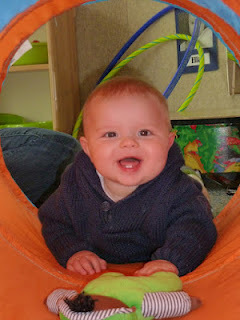
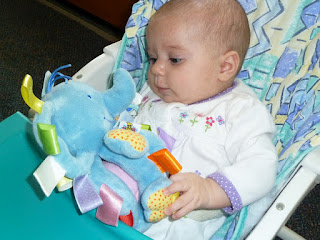
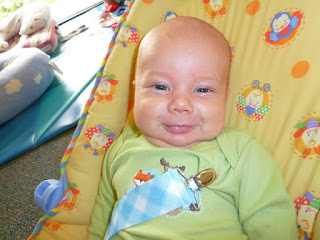
Breastfeeding is a topic near to my heart because I am around it every day.  Being an infant teacher, I am not only witnessing the relationship between a nursing mom and her baby, but I am also handling the precious milk and feeding it to the children several times a day.  These are the faces of some of the breastfed babies in my classroom.
Kellan - 6 Weeks
Kellan - 3 Months
Kellan - 5 Months
Kellan Today - 7 Months
Ellis - 8 Weeks
Ellis - 6 Months
Ellis - 9 Months
Ellis Today - 11 Months

Breastfeeding was the norm pre-WWII.  It was at this place in our country’s life when the men were away at war and the women had to get jobs outside of the home to support the homefront.  This is when formula made it greatest strides.  It was a way for working mothers to feed their babies without being near to breastfeed.  Since then, formulas have been engineered to be much more  similar to breastmilk.  Alas, nothing is as good for a baby as mother’s milk.  Breastmilk provides many benefits for baby that formula cannot - such as micronutrients not found in formula, better vision, protection against more childhood diseases, and reduced chances of obesity later in life.  These benefits alone justify why breast is best. 

 People often talk about why breastfeeding is beneficial for babies, but less often discuss why breastfeeding is beneficial for mothers and families.  A nursing mother has an easier time bonding with her baby, reduced risk of breast cancer and osteoporosis, satisfaction of meeting her infant’s needs, and natural contraception with exclusive breastfeeding for several months.  It is also beneficial for the rest of the family because it does not have the financial burden that formula can have, it allows for easier travel, and it is less stressful on a father, especially at night because he cannot be expected to feed the baby. 

 Breastfeeding is a cultural aspect that differs around the world.  After some research, I noticed that the more Westernized a country is, the lower the percentage of infants who are breastfed.  Countries that are less Westernized are more open and accepting to this natural means of providing nourishment to infants. 

 Keeping the consistency of my former entries, I chose to research breastfeeding in Korea.  It seems that breastfeeding is viewed theoretically as better for the baby, but unfortunately, Korean society does not provide much support for breastfeeding.  Babies born in hospitals are often given formula immediately.  Also, breastfeeding in public (discretely) is viewed as indecent and dirty.  If breastfeeding is viewed as  better for the baby, why is it not supported by society?  Reasons for formula use are similar to that of American women – insufficient supply of breastmilk and mother’s employment (which are actually directly linked to each other).

 Learning how unsupported mothers in other countries are when it comes to breastfeeding is disheartening.  It is still something that is not 100% supported by American society.  It is unlawful for an employee of a store or restaurant to ask a nursing mother to feed in a bathroom, yet how many moms end up doing just this?  This is a result of staring, dirty looks from onlookers, and people talking poorly of breastfeeding.  I personally consider breastfeeding to be one of my personal soapboxes and view myself as an advocate.  Given a situation, I will preach, teach, and inform anyone willing to listen, striving for support from all. 

 Breast IS Best!!!

Saturday, March 3, 2012

My Birth - You can't know where you're going, unless you know where you have been.


Mom, Dad, me, and Chelsea 


I am the baby of the family. I have one older brother who is 5 years my senior. We probably would have been closer in age, but my parents had a difficult time getting pregnant. They tried for a few years and were even in the process of beginning some fertility work when they found out they were pregnant with me! Considering the trouble they had conceiving, the doctor considered the pregnancy high risk and would not let them tell anyone until she was 12 weeks. They did not know whether I was a boy or a girl (by choice), but my 5-year old brother kept praying for a baby sister. I was very active in my mother’s belly when she was carrying me. As an Air Force family, my father did a lot of flying. The Air Force puts expectant fathers on “baby hold” for the last few weeks of a pregnancy, so he was not away when I was born. I was born on Langley Air Force Base, VA, and one of my first few moments of life was when my father held me up to the window and said “that’s an airplane.”

The day I was born was May 26, 1986. It was a Monday, and it was Memorial Day, so my dad was not at work. My mom had not been awake long when her water broke. They finished packing for the hospital and called the doctor. He met them at the hospital. She had a shared room with 3 other women, but my mom had the best bed, because it was by a window. She was in labor, but not dilating quickly, so they gave her Pitocin to help move things along. They did not perform an ex-ray to see how I was positioned, and if they had, they would have turned me around. I was not born breech, but I was born face-up. I guess you can say I was born ready to take on the world. This made delivery difficult for my mother. She ended up having 2 Episiotomies. I was born around 5:00 in the afternoon and when my dad told her “it’s a girl!” she said “Are you sure? Check again!” She was so excited to have a girl.

Because of the difficult delivery, my mom had to stay on an IV about 24 hours after delivery and they kept her in the hospital until Thursday (4 days, 3 nights). This was not to monitor me, but to ensure my mother’s health. She was able to order any food she wanted and said it wasn’t bad. When the time came to leave the hospital, she was ready. My brother was very excited to see and hold me when I came home. We also had a Siberian Husky, Nikki, who sniffed my head, licked me, and accepted me into his pack.

I know my birth was nothing glamorous, but I like to think that May 26, 1986 was extraordinary.

Birth is not the same everywhere in the world. In the USA, only about 1% of births are performed in the home, whereas, that is the majority for the rest of the world. My brother and his wife live in the USA, but have chosen to adopt from Korea. Their Little Blessing is named Micah and he is 2 ½ years old. He is close to my heart, and this is why I chose to explore birthing experiences in Korea.

Micah Douglas Mead
 From what I read, giving birth in Korea seems similar to American birthing traditions. Less than 1% of babies there are delivered at home. Delivery rooms are less private and are usually shared. Staying at the hospital after the birth for more than 2-3 days is common. Seaweed soup is the centerpiece of every hospital meal because it is believed to renew the blood, the skin and stimulate breast milk production. Everything is low-sodium, non-spicy and low in fat. Food is delivered five times a day to get you in the habit of eating that way as a nursing mother. New Korean mothers are also encouraged to hire an ajuma (I think this is like an extended-stay mid-wife) to help care for the baby in their home in the beginning. Unfortunately, babies that are not viewed as “perfect” are usually sent to orphanages. This is where my nephew came from. He has digestive problems in his lower intestines that deemed him “undesirable” in the Korean culture. After multiple surgeries, he will only be slightly delayed with potty training, but other than that, he is a perfectly normal and super smart little boy.
My brother's babies...Sasha and Micah